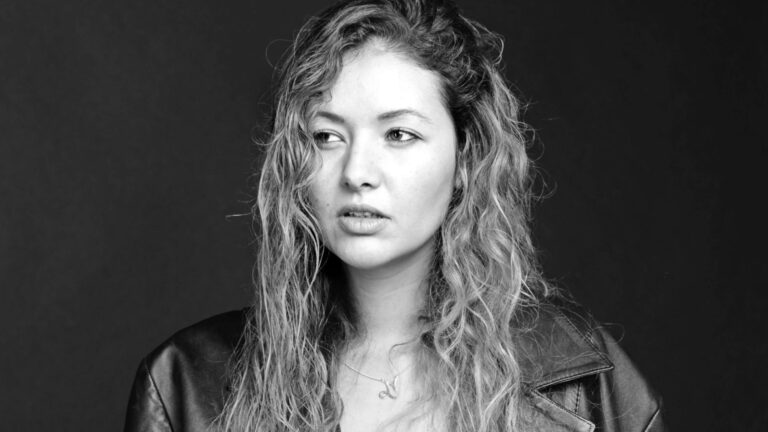
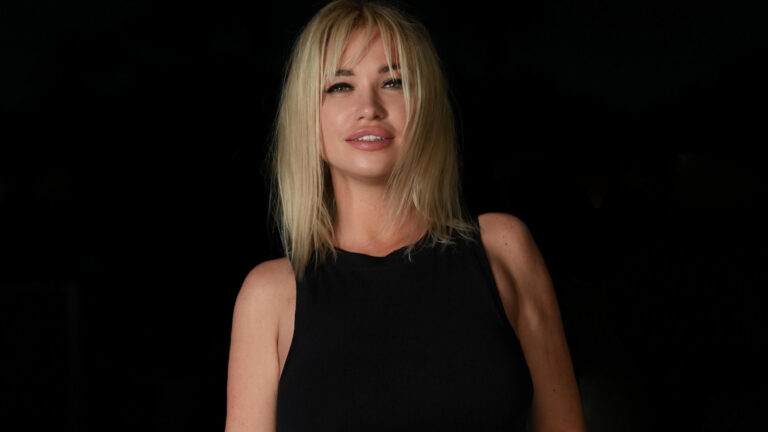
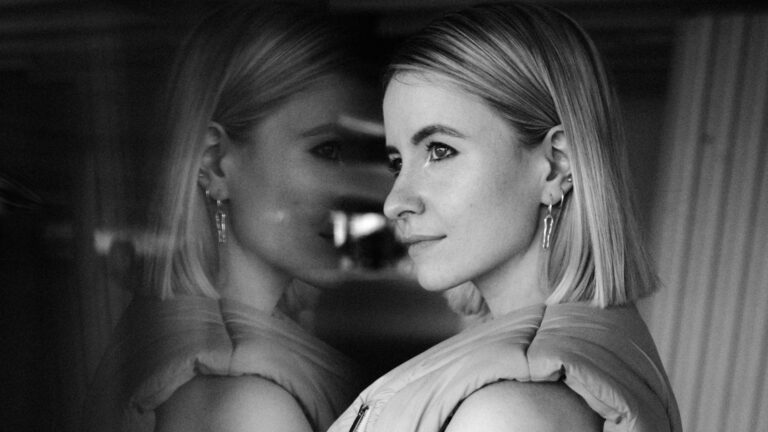
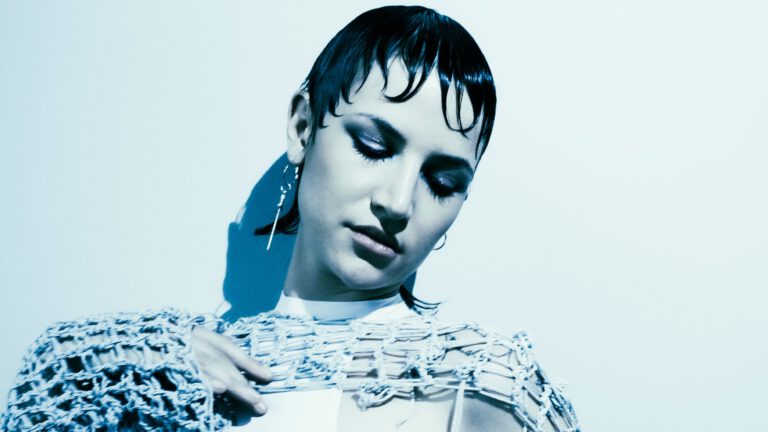
Kasia’s artistic evolution is deeply rooted in underground culture and has steadily gained global relevance. By blending melodic techno with emotional depth and energetic club dynamics, she has developed her own unique sound. She has taken her music from the vinyl-driven scene of London to the international festival stages of Tomorrowland and Afterlife. In doing so, she represents a generation of female artists who are defining their own sound and opening up new spaces for female visibility in electronic music.
Born in Poland as Kasia Sobczyk, the artist — who was shaped by her early encounter with electronic music in the ’90s — developed a deep connection to the scene at a young age. After moving to London in 2001, she fully immersed herself in the local club culture, first as a vinyl collector and later as a DJ.
She took her first professional steps in 2009 in East London’s underground scene, forging her own identity through intimate club nights and warehouse raves.
Musically, she initially moved between house, dub and techno, always driven by a distinct sense of groove and atmosphere. This openness formed the basis of her later sound: a style that does not follow trends, but expresses emotion.
Today, Kasia is renowned for a sound that lies between melodic techno, dark energy and an almost spiritual emotionality. Her tracks combine driving percussion with ethereal synths, creating sonic spaces that feel both introspective and ecstatic.
This duality — intensity and depth, energy and melancholy — is her trademark. Rather than a mere succession of tracks, her sets are dramaturgically structured journeys that guide the audience into a state of both control and abandon.
What began in small London clubs has led Kasia to perform on international stages. Her transition into the global electronic elite is marked by performances at Tomorrowland, Afterlife, Creamfields, Awakenings, the Ultra Music Festival, and the Untold Festival.
At the same time, her connection to club culture remains palpable, as demonstrated by her sets at iconic venues such as Room26 and Brooklyn Mirage, as well as Berlin clubs like Club der Visionaere and Kater Holzig. This shows that she hasn’t left her roots behind, but is carrying them forward consciously.
Kasia has also established herself as a producer. Releases on renowned labels such as Drumcode, Truesoul, Armada Music and Zamna Records highlight her importance within the scene.
With tracks like “Black Sun”, she makes a clear statement: powerful and emotionally charged, yet still club-oriented. Her remixes for artists such as Booka Shade demonstrate her ability to reinterpret existing works and imbue them with her own narrative depth.
Collaborative projects with artists such as KP Sessions further expand her creative horizons, reflecting her open approach to music production.
Kasia is a prime example of a new generation of female artists who define themselves not by gender roles, but by artistic clarity. Rather than following a linear career path, she has taken an organic approach, shaped by her understanding of the scene, her experience, and her self-determination.
In a male-dominated scene, she is making her mark not through a flashy persona, but through consistency in her sound and her presence on international stages.
Her journey shows that visibility doesn’t have to be forced — it comes from authenticity.
For many aspiring female DJs, she thus becomes a point of reference — not as a traditional role model, but as proof that it is possible to forge one’s own path and be heard.